




Aarno Aukia

DevSecOps: Security in DevOps

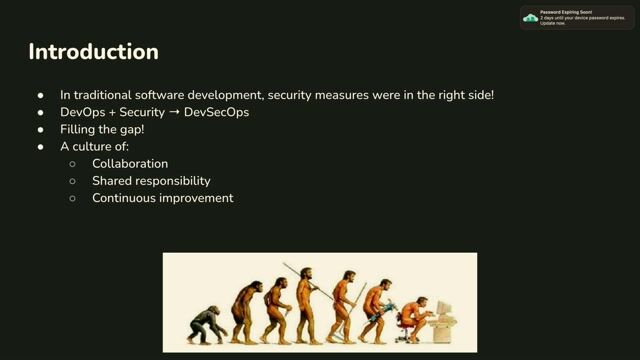
A Swiss bank automated security into their pipeline, proving you can achieve both agility and compliance. Here's how they did it.

DevSecOps: Security in DevOps
#1about 3 minutes

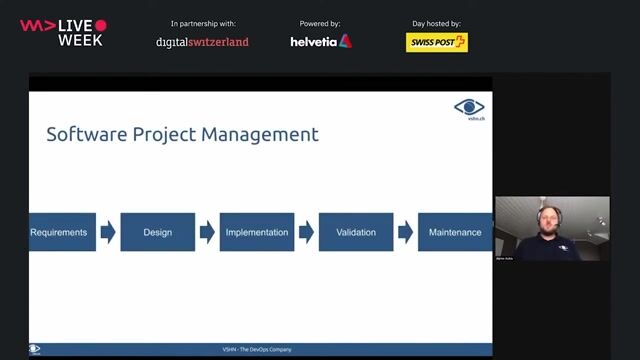
Understanding the evolution from waterfall to DevOps

The software development lifecycle shifted from the linear waterfall model to an iterative agile and DevOps approach to better handle continuous maintenance and new features.

#2about 2 minutes

Why security must be integrated from the start

Treating security as a final gatekeeper creates a bottleneck; instead, it should be integrated throughout the development process as a set of non-functional requirements.

#3about 5 minutes

Exploring the core principles of DevSecOps

A successful DevSecOps culture is built on principles like trust, transparency, incremental improvements, automation, and continuous education.

#4about 3 minutes

Automating security checks in the CI/CD pipeline

Integrate automated tools for static code analysis, dependency management, and container image scanning directly into the build process to catch vulnerabilities early.

#5about 3 minutes

Using containers to improve security and deployment

Containers like Docker provide application isolation, prevent running as root, and support best practices such as the 12-factor app pattern for more secure operations.

#6about 6 minutes

Managing production complexity with container orchestration

While Docker packages applications, container orchestrators like Kubernetes are essential for managing production concerns like service discovery, scheduling, and availability.

#7about 2 minutes

Centralizing security services in a Kubernetes ecosystem

The Kubernetes ecosystem enables security teams to provide standardized, centralized services for authentication, logging, and monitoring across all applications.

#8about 5 minutes

Case study of regulated deployments in banking

A Swiss banking software company uses OpenShift and an automated business process framework to manage deployments with auditable approval gates, meeting strict financial regulations.

#9about 4 minutes

Shifting from full-stack audits to additive governance

By certifying a standardized container platform, security governance can shift from repetitive full-stack audits to reviewing only the application and its specific configuration.

Related jobs
Jobs that call for the skills explored in this talk.

Featured Partners

Related Articles

View all articles
AG
Andre Braun, GitLab
Now is the time for industrialized software development
Now is the time for industrialized software development Recently, I received a letter from my car’s manufacturer alerting me to a recall. They had discovered a defective part and wanted to replace it. It was easily fixed, and I might have forgotten a...
Now is the time for industrialized software development
DC
Daniel Cranney
Dev Digest 196: AI Killed DevOps, LLM Political Bias & AI Security
Inside last week’s Dev Digest 196 . ⚖️ Political bias in LLMs 🫣 AI written code causes 1 in 5 security breaches 🖼️ Is there a limit to alternative text on images? 📝 CodeWiki - understand code better 🟨 Long tasks in JavaScript 👻 Scare yourself into n...
Dev Digest 196: AI Killed DevOps, LLM Political Bias & AI Security

From learning to earning

Jobs that call for the skills explored in this talk.

DevSecOps

alvatross
Municipality of Vitoria-Gasteiz, Spain

Intermediate
API
DevOps
Python
Gitlab
Docker
+10
DevOps

UnderDefense

Remote
Bash
Azure
React
Kafka
+16